Search through


Cocamidopropyl Betaine (CAPB) is an amphoteric surfactant mixture of closely related organic compounds derived from coconut oil and dimethylaminopropylamine. dimethylaminopropyl betaine. Supplied as a 30% active aqueous solution, it is valued for its mild cleansing, foam boosting, and viscosity building properties. CAPB is a key ingredient in shampoos, body washes, liquid soaps, hand sanitizers, and household cleaners, where it improves foam quality and reduces irritation. A lso used in industrial cleaners and textile auxiliaries for its compatibility and stability across a wide pH range. Also referred to as Cocamidopropyl dimethyl glycine, 1-Propanaminium, 3-amino-N-(carboxymethyl)-N,N-dimethyl-, N-coco acyl derivs., inner salts by “CAPB” supplier and manufacturer. We are the leading, trusted CAPB supplier worldwide and in the United States, with reliable lead times and global supply capability.
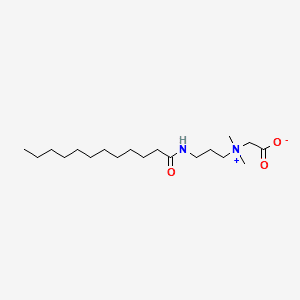
Cocamidopropyl Betaine (CAPB) is an amphoteric surfactant mixture of closely related organic compounds derived from coconut oil and dimethylaminopropylamine. dimethylaminopropyl betaine. Supplied as a 30% active aqueous solution, it is valued for its mild cleansing, foam boosting, and viscosity building properties. CAPB is a key ingredient in shampoos, body washes, liquid soaps, hand sanitizers, and household cleaners, where it improves foam quality and reduces irritation. A lso used in industrial cleaners and textile auxiliaries for its compatibility and stability across a wide pH range. Also referred to as Cocamidopropyl dimethyl glycine, 1-Propanaminium, 3-amino-N-(carboxymethyl)-N,N-dime...

.3d8f8f41.svg)
Oleochemicals
.3556d45a.svg)

Surfactants


Amphoteric
.7767eb0f.png)

Chemical Properties & Specifications
H315 (69.7%) Skin corrosion/irritation
H318 (18.8%): Serious eye damage/eye irritation
H319 (77.8%): Serious eye damage/eye irritation
H400 (29.1%): Hazardous to the aquatic environment, acute hazard
H412 (17%): Hazardous to the aquatic environment, long-term hazard
P264, P264+P265, P273, P280, P302+P352, P305+P351+P338, P305+P354+P338, P317, P321, P332+P317, P337+P317, P362+P364, P391, and P501
Mild surfactant and foam booster in shampoos, soaps, hand washes, and sanitizers
Ingredient in dishwashing liquids and multi-surface cleaners
Emulsifier and foaming agent in textile processing, leather treatment, and hard-surface cleaners.
CAPB uses mixed fatty acids from coconut oil. Since coconut oil contains fatty acids of different lengths, CAPB is a mixture of related betaines, with lauramidopropyl betaine being the primary component
Despite the name cocamidopropyl betaine, the molecule is not synthesized from betaine. Instead it is produced in a two-step manner, beginning with the reaction of dimethylaminopropylamine (DMAPA) with fatty acids from coconut or palm kernel oil (lauric acid, or its methyl ester, is the main constituent).
Cocamidopropyl betaine is an amphoteric (or zwitterionic) surfactant, meaning it has both positively and negatively charged groups in its molecule
Cocamidopropyl Betaine: Derived from a mixture of fatty acids from coconut oil and Lauramidopropyl Betaine: Derived from isolated lauric acid.
Yes export ready with coa, tds, sds documentations.