Search through


2-Phenyl Benzimidazole-5-Sulfonic Acid (PBSA) is an organic compound with excellent UV absorption properties, used primarily in sunscreens and personal care products. It offers broad-spectrum protection by absorbing UVA and UVB rays, making it an essential ingredient in cosmetic formulations. The compound's high photostability ensures lasting protection against UV radiation, which is why it is widely used in sunscreen and other skincare products.
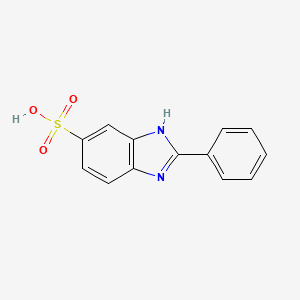
2-Phenyl Benzimidazole-5-Sulfonic Acid (PBSA) is an organic compound with excellent UV absorption properties, used primarily in sunscreens and personal care products. It offers broad-spectrum protection by absorbing UVA and UVB rays, making it an essential ingredient in cosmetic formulations. The compound's high photostability ensures lasting protection against UV radiation, which is why it is widely used in sunscreen and other skincare products.

.3d8f8f41.svg)
Beauty & Personal Care
.3556d45a.svg)

UV Filter


Sunscreen Active Ingredient
.7767eb0f.png)

Chemical Properties & Specifications
Not classified as hazardous under GHS regulations. May cause mild skin and eye irritation in sensitive individuals.
H315: Causes mild skin irritation. H319: Causes eye irritation. H335: May cause respiratory irritation (if inhaled in dust form).
P264: Wash hands thoroughly after handling. P280: Wear protective gloves, clothing, and eye protection. P305 + P351 + P338: If in eyes, rinse cautiously with water for several minutes. Remove contact lenses if present and easy to do. Continue rinsing. P302 + P352: If on skin, wash with plenty of soap and water.
Store in a cool, dry, and well-ventilated area away from direct sunlight. Keep container tightly sealed to prevent moisture absorption. Avoid inhalation of dust and contact with eyes, skin, and clothing. Use appropriate personal protective equipment (PPE) such as gloves and safety goggles when handling.
Inhalation: Move to fresh air immediately. Seek medical attention if symptoms persist. Skin Contact: Wash with soap and water. Remove contaminated clothing. Eye Contact: Rinse with plenty of water for at least 15 minutes. Seek medical help if irritation continues. Ingestion: Rinse mouth with water. Do not induce vomiting. Seek medical advice if discomfort occurs.
Flammability: Non-flammable under normal conditions. Extinguishing Media: Use water spray, foam, dry chemical, or CO₂. Decomposition Products: Can release sulfur oxides (SOₓ), nitrogen oxides (NOₓ), and carbon oxides (COₓ) when exposed to extreme heat.
Acute Toxicity: Low toxicity under normal use conditions. Skin & Eye Irritation: May cause mild irritation with prolonged exposure. Environmental Impact: Considered biodegradable but should not be released into water bodies in large quantities.
Used in sunscreens and other personal care products as a UV filter.
Found in anti-aging and sun protection formulations.
Generally non-sensitizing and suitable for sensitive skin when used within recommended concentrations.
Suitable for oil-free formulations, ensuring a lightweight, non-greasy feel in personal care products.
Store in a cool, dry place.
Keep away from heat, moisture, and direct sunlight.
Keep container tightly closed to avoid contamination.
PBSA provides broad-spectrum UV protection, has excellent water solubility, and is used in lotions, creams, and hybrid sunscreens.
PBSA is photostable but should be stored away from direct sunlight to prevent oxidative degradation.
It is approved in EU and Asian markets, with maximum allowable concentrations varying by region.
PBSA absorbs UVB radiation (280-320 nm) by undergoing an excitation-deexcitation cycle, where the absorbed energy is dissipated as harmless heat. This prevents skin damage and DNA mutation caused by UV exposure. Its sulfonic acid group enhances solubility, allowing efficient formulation in aqueous-based sunscreens.
PBSA is a highly effective UVB filter that provides broad-spectrum sun protection in personal care products. It is water-soluble, making it ideal for transparent, non-oily sunscreen formulations. PBSA is commonly used in lotions, creams, and gels due to its high photostability and compatibility with other organic and inorganic UV filters.