
Bifenthrin 10% EC is a broad-spectrum synthetic pyrethroid-based insecticide used to control a variety of chewing and sucking pests in agricultural and horticultural crops. It exhibits contact and stomach action, provides rapid knockdown and long residual effect, and is also effective against termites in pre- and post-construction treatment. The EC formulation allows excellent spreadability and adhesion to plant surfaces, making it suitable for foliar application.

Chemical Properties & Specifications
Acute Toxicity: Category 3 Aquatic Toxicity: Category 1 (very toxic to aquatic organisms)
H302: Harmful if swallowed H315: Causes skin irritation H410: Very toxic to aquatic life with long-lasting effects
P280: Wear protective gloves/clothing P273: Avoid release to the environment P391: Collect spillage
Whiteflies, leafhoppers, stem borers, fruit borers, mites, termites
Cotton, sugarcane, vegetables, rice, fruits, ornamental plants
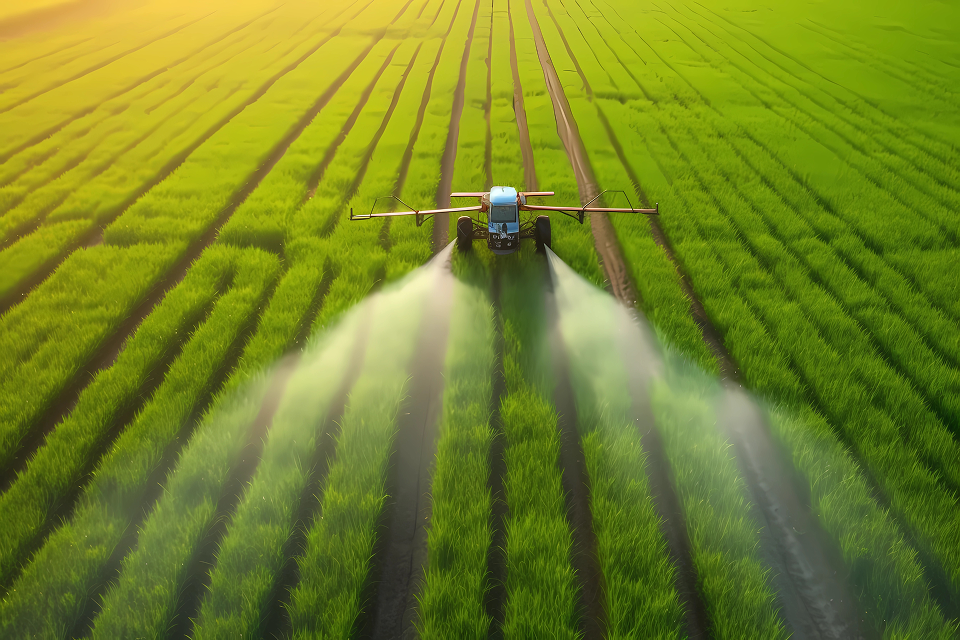
Foliar spray with knapsack sprayer; termite application for soil drenching. Recommended dose: 200–300 mL/ha depending on crop and pest stage
Store in tightly closed containers in a cool, well-ventilated area
100 mL, 250 mL, 500 mL, 1 L, 5 L
Packed in HDPE bottles with leak-proof sealing Palletized, shrink-wrapped for export
Max 2 drums/cases high
2 years from manufacturing date
Acts as a nerve poison by disrupting sodium channels in insects, causing paralysis and death.
Yes. Registered for agricultural crop use and termite control in civil construction.
439680-76-9, 107497-60-9, 107538-32-9, 92880-79-0
Typically 7–10 days, depending on crop and national regulations.
COA, MSDS, TDS, and application guide with dilution ratios.
Bifenthrin is broad-spectrum, so caution advised for pollinator exposure.
No. It is a synthetic pyrethroid and not permitted in organic systems.
Category : Plant Health, Nutrients & Soil Management
Sub-Category : Fertilizers & Nutrients
Category : Agrochemical Intermediates
Sub-Category : Specialty & Advanced Intermediates
Description : 2-Isopropoxyethylamine (CAS 81731-43-3), often used interchangeably with CAS 83495-51-6, is a specia...
Category : Crop Protection & Pest Control
Sub-Category : Insecticides
Description : Clothianidin is a systemic broad-spectrum, neonicotinoid insecticide used to control sap-sucking ins...
Category : Plant Health, Nutrients & Soil Management
Sub-Category : Plant Growth Regulators & Harvest Aids
Description : Phosphorous acid (CAS 13598-36-2) serves as a vital reducing agent and intermediate in the API inter...