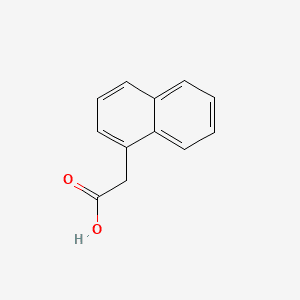

1-Naphthaleneacetic Acid (Alpha NAA) or alpha-naphthaleneacetic acid is a synthetic plant hormone belonging to the auxin class. It is used primarily to stimulate root formation, control fruit drop, and enhance flowering and vegetative growth. It mimics natural auxins to promote cell division and elongation, commonly used in horticulture, tissue culture, and crop management. It is also called as (α-Naphthaleneacetic Acid) / Alpha Napthlene Acetic Acid. Napthaleneacetic acid supplier and manufacturers prefer this for Suitable for Vegetable crop nurseries & Tissue culture laboratories, where it's valued for its role in promoting root development and plant growth regulation. Also referred to as Tre-hold, alpha-NAA by 2-naphthalen-1-ylacetic acid manufacturers.
1-Naphthaleneacetic Acid (Alpha NAA) or alpha-naphthaleneacetic acid is a synthetic plant hormone belonging to the auxin class. It is used primarily to stimulate root formation, control fruit drop, and enhance flowering and vegetative growth. It mimics natural auxins to promote cell division and elongation, commonly used in horticulture, tissue culture, and crop management. It is also called as (α-Naphthaleneacetic Acid) / Alpha Napthlene Acetic Acid. Napthaleneacetic acid supplier and manufacturers prefer this for Suitable for Vegetable crop nurseries & Tissue culture laboratories, where it's valued for its role in promoting root development and plant growth regulation. Also referred to as ...

Chemical Properties & Specifications
o Acute Toxicity (Category 4) - H302: Harmful if swallowed o Skin Irritation (Category 2) - H315: Causes skin irritation o Serious Eye Damage (Category 1) - H318: Causes serious eye damage o Specific Target Organ Toxicity (Category 3) - H335: May cause respiratory irritation o Chronic Aquatic Toxicity (Category 3) - H412: Harmful to aquatic life with long- lasting effects
o P261: Avoid breathing dust. o P273: Avoid release to the environment. o P280: Wear protective gloves, eye protection, and face protection. o P301 + P312: If swallowed, call a poison center or doctor if feeling unwell. o P302 + P352: If on skin, wash with plenty of water. o P305 + P351 + P338: If in eyes, rinse cautiously with water, remove contact lenses, and continue rinsing.
Used to stimulate root development in plant cuttings and tissue cultures.
Prevents premature fruit drop in citrus, apple, and mango crops.
Enhances stem elongation, leaf expansion, and lateral bud growth.
Improves early germination and vigor in treated seeds.
Applied as foliar sprays to regulate flowering and fruiting cycles.
Store in a dry, cool, ventilated area away from sunlight
25 kg HDPE drums or bags
2 drums high (palletized)
Non-hazardous under standard transport regulations
24 months in sealed packaging
It acts as a synthetic auxin that promotes root formation, regulates growth, and prevents premature fruit drop.
By reducing fruit shedding and improving nutrient translocation, it increases fruit set and uniform development.
Yes, it's frequently used in tissue culture, hydroponic propagation, and greenhouse systems for rooting and vegetative control.
It can be safely mixed with compatible micronutrients, surfactants, and bio-stimulants without loss of efficacy.
It supports early root initiation and shoot development, especially in transplant shock mitigation.
Each batch comes with a COA, MSDS, and optional GLP stability data to ensure traceability and compliance.
It is non-flammable, has a long shelf life, and is safely transportable in standard containers without hazard-class restrictions.
It is pre-registered or approved under agrochemical guidelines in several countries across Asia, Africa, and LATAM.